
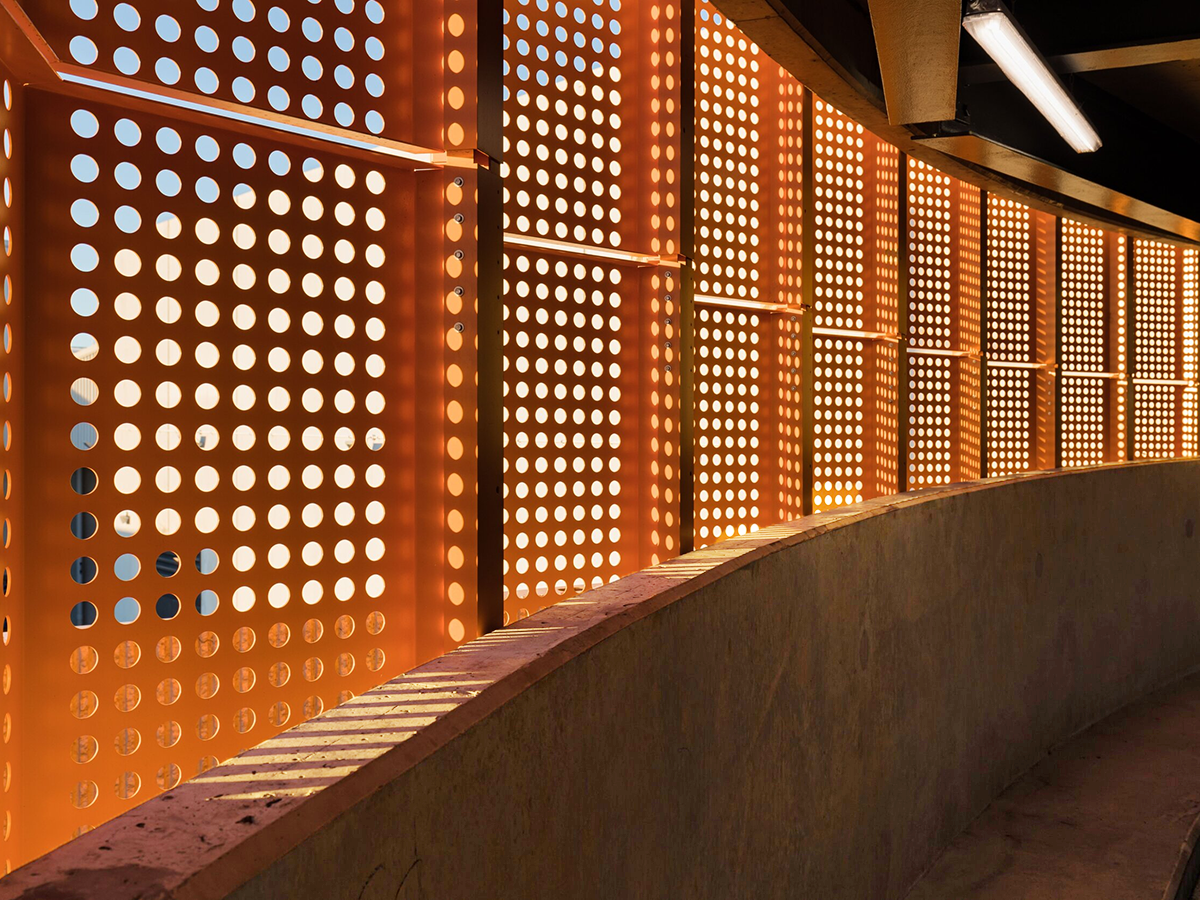
Project Location: Miami, Florida, USA
Customer Type: Commercial Architectural Contractor
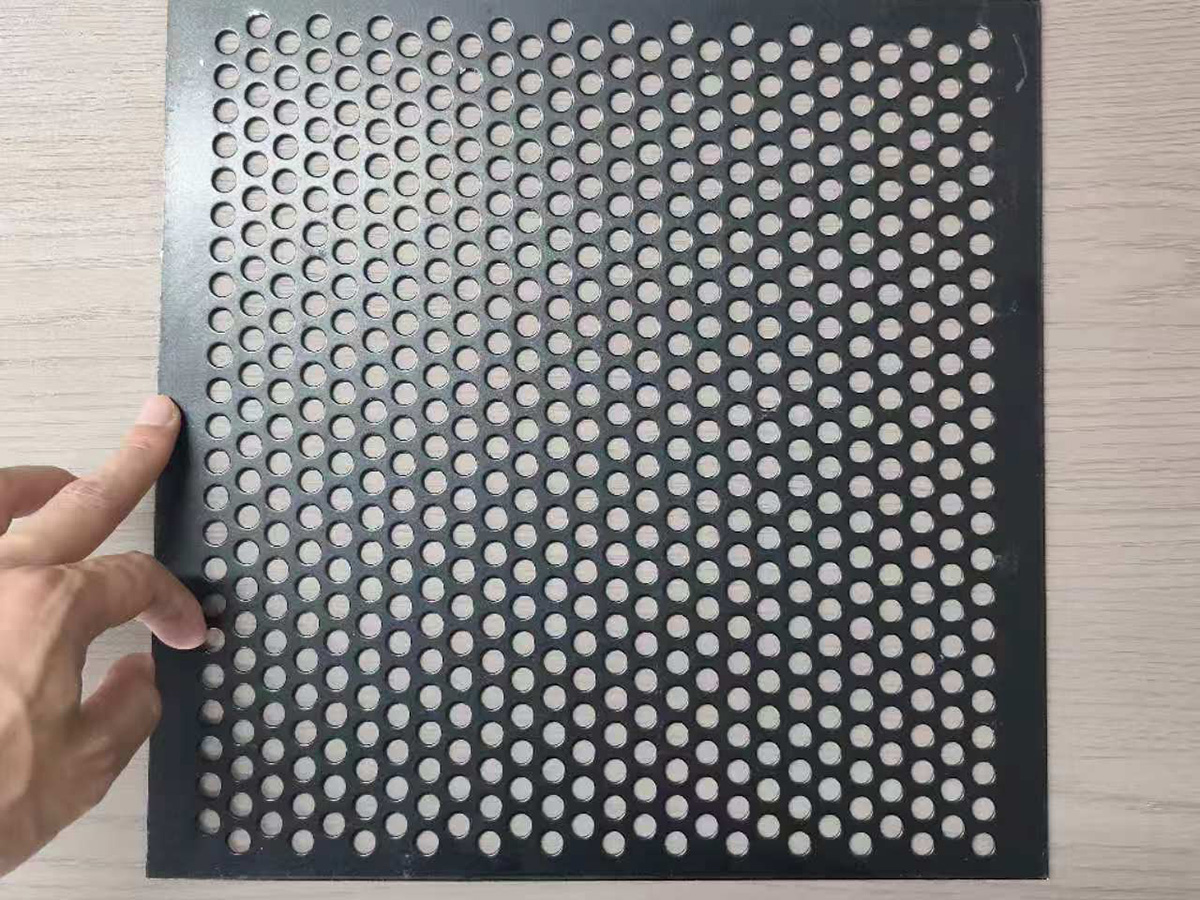
Product: Perforated Aluminum Panels
Material: Aluminum
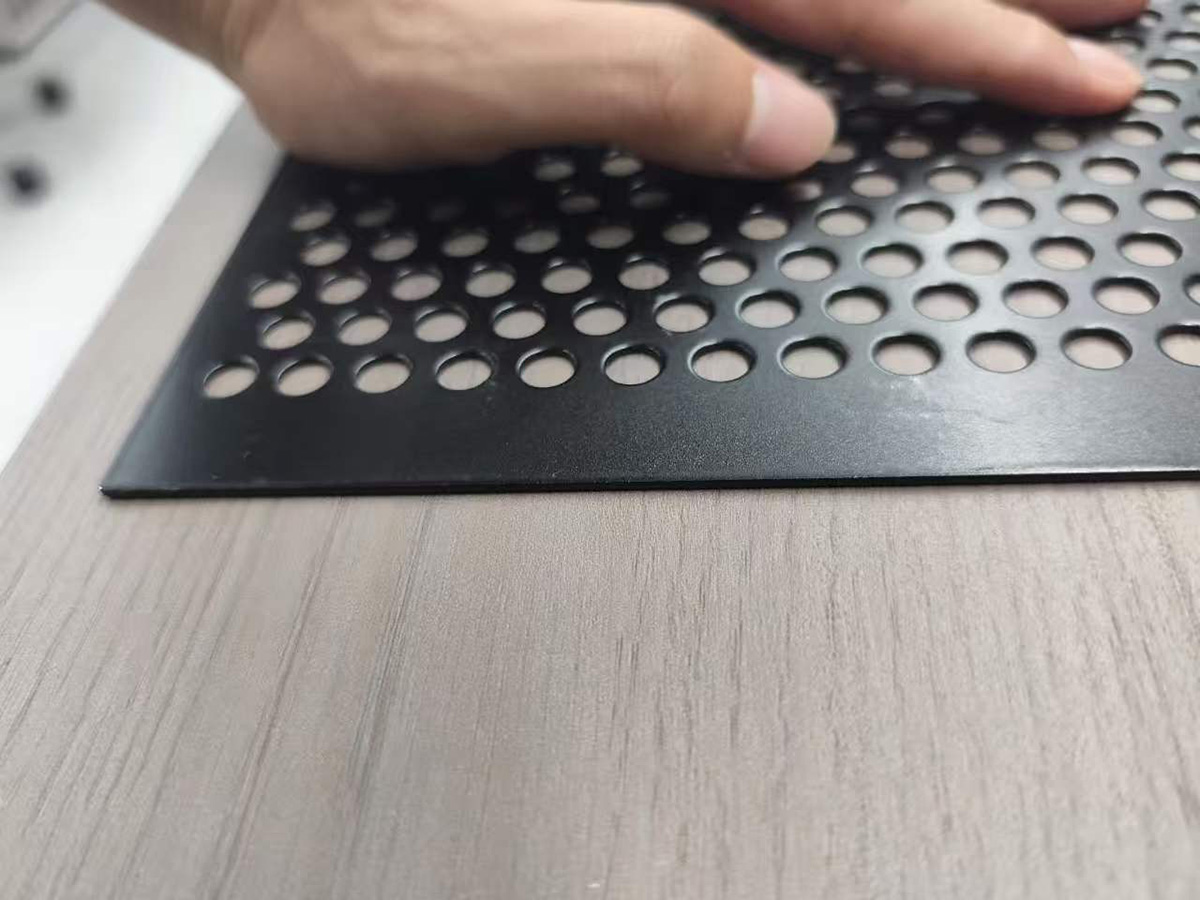
Hole Diameter: 6 mm
Pitch: 15 mm
Thickness: 2 mm
Surface Finish: PVDF Fluorocarbon Coating
Project Overview
Large-scale architectural facade projects demand far more than simply manufacturing perforated metal panels.
Even when every individual panel meets dimensional tolerances, slight variations between production batches can create visible misalignment once hundreds of panels are installed together.
This case study explains how HIGHTOP helped a U.S. contractor eliminate that risk through systematic manufacturing and quality control.
Customer Challenge
In August 2025, Michael, an architectural contractor based in the southeastern United States, contacted HIGHTOP through our website.
His company had won a commercial façade project in Miami requiring approximately 380 perforated aluminum panels.
The specification itself was straightforward:
- 6 mm hole diameter
- 15 mm pitch
- 2 mm aluminum sheet
- PVDF fluorocarbon coating
However, Michael’s concern had nothing to do with pricing.
He explained:
“I’ve worked with three suppliers before. Individual panels looked perfect, but once installed across a large façade, the hole patterns no longer aligned. The owner rejected the installation twice, and we had to remove and reinstall everything.”
The previous project resulted in:
- Nearly two months of rework
- Significant profit loss
- Damage to his company’s reputation
What Michael needed wasn’t simply another perforated panel supplier.
He needed a manufacturer capable of ensuring every panel looked identical after installation.
Why Large-Scale Perforated Panel Projects Often Fail
One perforated panel may look perfect.
Hundreds installed side by side tell a completely different story.
Small production tolerances can accumulate into obvious visual defects, including:
- Misaligned hole patterns
- Uneven panel joints
- Inconsistent visual appearance
- Owner rejection
- Expensive on-site rework
For architectural perforated panels, visual consistency is just as important as dimensional accuracy.
Our First Step: Understanding the Problem Before Quoting
Instead of immediately sending a quotation, our engineering team asked three questions:
- How many panels does the project require?
- What installation method will be used?
- What exactly caused the failure of the previous project?
Michael explained that:
- The project required approximately 380 panels
- Panels would be installed in a flat layout
- Previous batches had accumulated up to 2 mm seam deviation
Although each individual panel met the stated tolerance of ±0.3 mm, the cumulative deviation became clearly visible across the façade.
Our Visual Consistency Control Plan
Instead of sending only a quotation, we prepared a dedicated Perforated Panel Visual Consistency Control Plan.
The proposal included:
- Illustration of our ±0.1 mm perforation tolerance
- Installation simulation showing alignment across all 380 panels
- Die numbering management system ensuring identical tooling throughout production
Michael later told us it was the first time a supplier had focused on solving the installation problem rather than simply selling panels.
How HIGHTOP Ensured Perfect Panel Alignment
1. Dedicated Tooling Management
Every one of the 380 panels was produced using a single tooling set.
After every 100 panels, tooling calibration was performed.
Each panel received:
- Die number
- Production batch number
- Full production traceability
Future repeat orders could therefore use exactly the same tooling.
2. First Article Approval & In-Process Inspection
Before mass production, three uncoated sample panels were produced for customer approval.
After approval, inspections were performed every 50 panels.
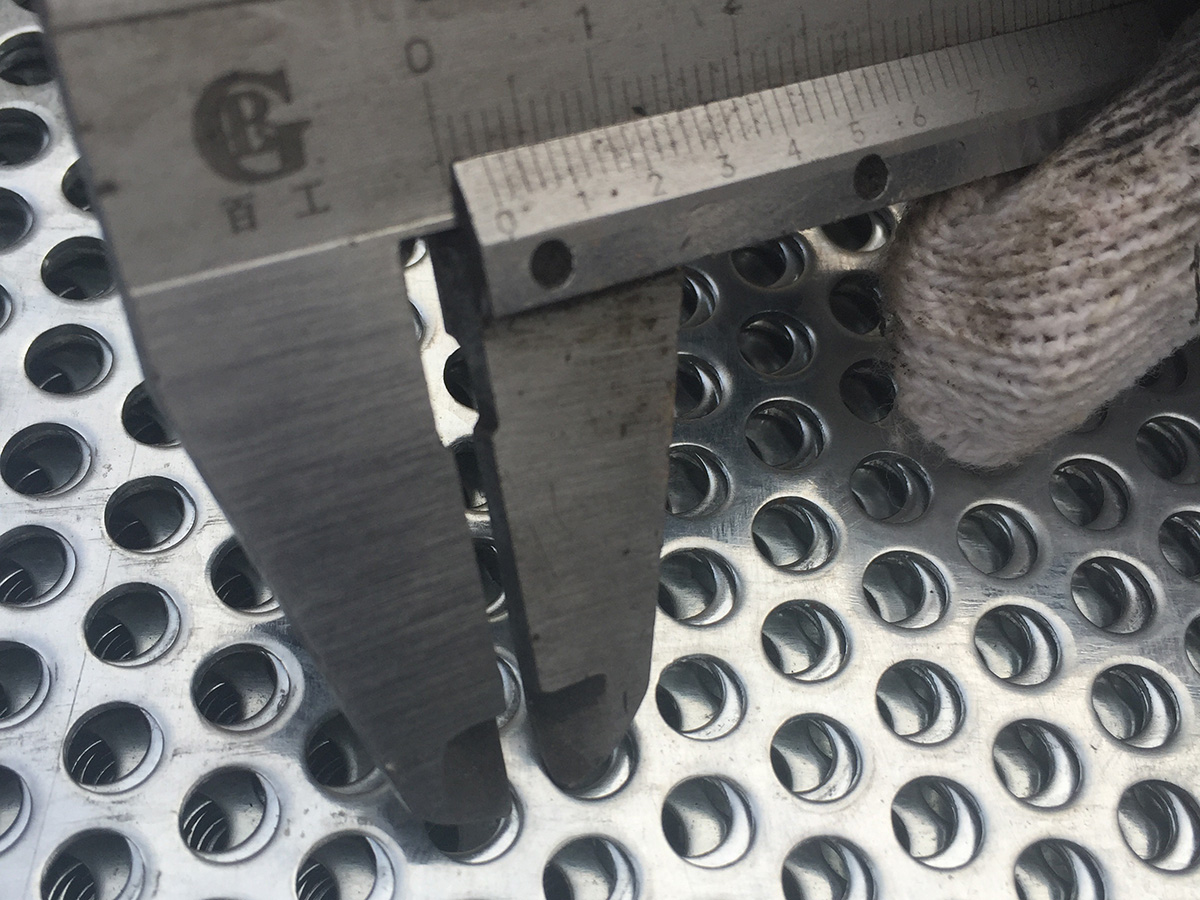
Each inspection measured:
- Hole diameter (±0.1 mm)
- Hole pitch (±0.15 mm)
- Diagonal dimensions
All records were fully traceable.
3. 100% Flatness Inspection Before Coating
PVDF coating involves high-temperature curing.
Thin aluminum sheets may deform slightly during this process.
Before coating, every one of the 380 panels underwent a complete flatness inspection.
Panels showing any deformation were re-leveled before entering the coating line.
No deformed panels were shipped.
4. Installation Sequence Packaging
Every package was labeled according to installation order.
Panels could be installed directly according to sequence:
- Row by row
- Column by column
This eliminated on-site sorting and reduced installation time.
Michael estimated this alone saved three working days.
Project Results
The project was completed in November 2025.
Performance Comparison
| Item | Previous Supplier | HIGHTOP |
|---|---|---|
| Hole Diameter Tolerance | ±0.3 mm | ±0.1 mm |
| Maximum Seam Deviation | 2 mm | <0.5 mm |
| Rework | 2 Times | None |
| Installation Time | About 6 Weeks | About 3.5 Weeks |
| Owner Acceptance | Passed on Third Inspection | Passed First Inspection |
Customer Feedback
Michael shared the following after project completion:
“380 panels installed on the wall, and they look like one single panel. My installation crew said they’ve never worked with perforated panels this easy to install. The next order is already in planning.”
What This Project Demonstrates
This project was not won because HIGHTOP offered the lowest price.
Our quotation was approximately 6% higher than the previous supplier.
The customer chose us because we provided a complete manufacturing solution.
We Solved the Real Problem
Michael wasn’t buying perforated aluminum panels.
He was buying a façade that looked perfectly aligned after installation.
We Delivered a Solution Instead of a Price List
Before discussing pricing, we demonstrated how we would control quality throughout production.
That built confidence long before commercial negotiations began.
We Extended Quality Control Beyond Manufacturing
Our installation sequence labeling helped simplify on-site work, reducing installation time and minimizing human error.
Quality management continued beyond the factory floor.
Applications Beyond Architectural Facades
Our perforated metal panels are widely used in many industries, including:
- Architectural façade systems
- Industrial equipment guards
- Acoustic wall and ceiling panels
- Filtration and screening equipment
- Agricultural ventilation systems
- Decorative metal ceilings
- Sunshade and façade cladding
Why Choose HIGHTOP for Perforated Metal Panels?
HIGHTOP provides:
- ISO 9001:2015 Certified Manufacturing
- ASTM E2016 Quality Standards
- Complete Batch Traceability
- Dedicated Tooling Management
- Strict Dimensional Inspection
- PVDF & Powder Coating Options
- Customized Hole Patterns
- Professional Export Packaging
- Fast Technical Response
Looking for a Reliable Perforated Metal Panel Manufacturer?
If your project requires:
- Large-scale architectural panel consistency
- Tight hole diameter tolerances
- Tooling traceability
- Batch consistency
- Easier on-site installation
our engineering team is ready to help.
Simply send us:
- Drawings
- Hole pattern
- Material
- Panel dimensions
- Surface finish requirements
We’ll recommend the most suitable manufacturing solution for your project.
HIGHTOP Group
Professional Metal Wire Mesh Manufacturer in China
ISO 9001:2015 Certified | ASTM E2016 Compliant
✔ Three Specialized Production Workshops
✔ Experienced Management Team (20+ Years Each)
✔ 24-Hour Technical Response
We look forward to earning your trust—one panel at a time.
Request a Quote
Please email us via the contact form below, we will get back to you as soon as possible.