

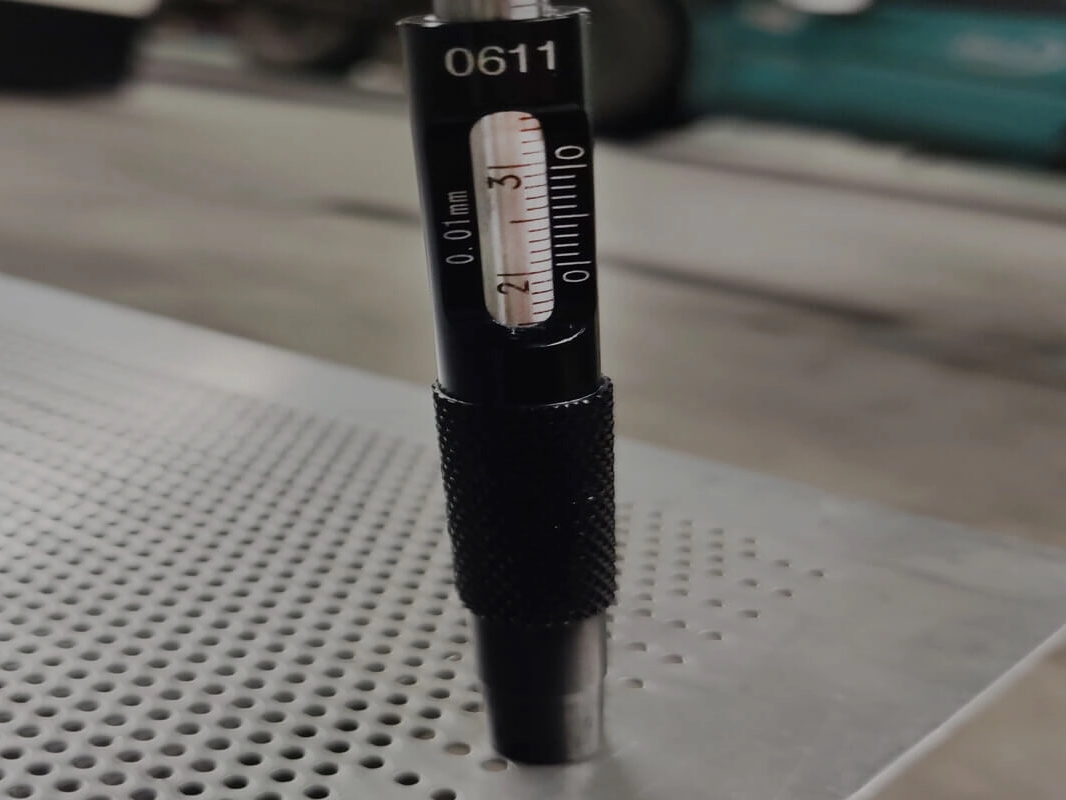
A micro perforated sheet is a metal plate containing closely controlled small holes, commonly selected for screening, airflow control, equipment protection and filtration support. Hole diameter is important, but it cannot define the product by itself. A usable specification must also state the pitch, hole arrangement, sheet thickness, solid margins, material and finished component dimensions. For equipment designers and industrial buyers, understanding how these variables interact helps prevent restricted flow, weak panels, premature corrosion and quotations based on products that are not technically equivalent.
Article Summary
- A 0.4–1 mm hole size does not by itself determine retention, flow or panel strength.
- Pitch, pattern and thickness must be evaluated together with the operating medium and pressure conditions.
- Quotations should use the same drawing, tolerances, material grade, surface condition and edge requirements.
Start with the Function, Not the Smallest Hole
HIGHTOP lists common hole diameters of 0.4, 0.5, 0.6, 0.8 and 1 mm, with custom sizes subject to review. Choosing the smallest hole is not automatically the safest approach.
For screening, the hole must be related to particle size, shape and deformability. Fibrous solids may bridge across openings, while soft particles can pass through a nominally smaller hole. Smaller holes can also increase resistance and clog more readily.
The practical question is what the panel must retain, what must pass through and under which flow, pressure, temperature and cleaning conditions.
The Five Dimensions That Define Perforation Performance
Hole Diameter
Hole diameter describes the nominal opening, not a complete filtration rating. Actual separation still depends on particle geometry, orientation and operating pressure.
Buyers should state the permitted tolerance and measurement method. With micro holes, a small variation represents a significant proportion of the nominal diameter.
Pitch and Hole Arrangement
Pitch is the center-to-center distance between neighboring holes. Round holes may be arranged in straight rows or staggered patterns. Two sheets with identical 0.6 mm holes can have very different open areas when their pitches differ.
Closer pitch generally provides more open area but leaves narrower metal sections between holes. Wider pitch retains more solid material but reduces flow passages. This trade-off must be reviewed with thickness, panel size and support conditions; open area alone is not a strength rating.
Sheet Thickness
Thickness influences rigidity, weight and production feasibility. When the hole is very small relative to sheet thickness, producing clean, consistent perforations becomes harder. Feasibility depends on the material, process and tolerances and requires production review.
Specify base-sheet thickness separately from any galvanized or powder-coated surface.
Solid Margins and Unperforated Areas
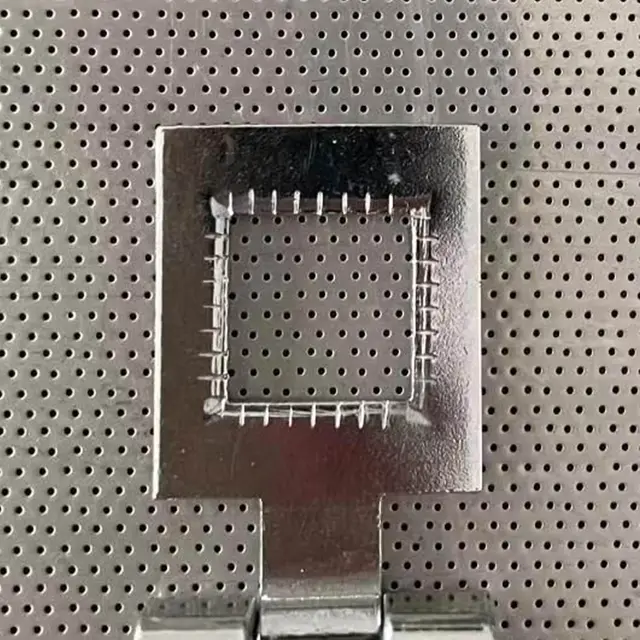
Many components need unperforated borders for fastening, welding, sealing or forming. A drawing should define the margin on each side and identify any solid zones around mounting holes or seams.
Without defined margins, cut lines can pass through holes, fasteners may sit too near the perforated field, and pattern alignment can vary. State whether the pattern must be centered.
Part Size and Flatness
Panel dimensions affect handling and flatness. Flatness expectations should be agreed for the actual part size rather than assumed from nominal thickness.
For a cylinder, basket or housing, specify the final dimensions and seam location before perforation and forming are planned.
Selecting the Material for the Operating Environment
Available categories include stainless steel, galvanized steel, carbon steel, titanium and nickel. They are not interchangeable, and not every hole-and-thickness combination is feasible in each material.
Stainless steel is often considered where cleanliness and corrosion resistance matter, but its grade must match the medium, temperature and cleaning chemicals. Carbon steel may suit dry conditions or receive separate protection. Galvanized sheet adds a zinc-based layer, but exposure and post-perforation fabrication still matter.
Titanium and nickel are specialty choices for particular chemical or temperature environments and should be based on verified compatibility requirements.
Surface Condition Is Part of the Specification
HIGHTOP provides surface options described as galvanized, powder-coated, mill or polished. The correct choice depends on both function and appearance.
A mill finish may suit parts where appearance is secondary. For polished material, state the finish level and directionality. Galvanizing protects compatible steel substrates, while powder coating adds a colored surface subject to coating type and service conditions.
Coating buildup can reduce 0.4 or 0.5 mm openings. Clarify whether hole diameter applies before or after finishing and define an acceptance limit for blocked or restricted holes.
Typical Uses and Their Different Priorities
Industrial Screening and Filtration Support
For screening, hole accuracy, open area and clogging behavior usually matter more than appearance. Define whether the plate performs the separation or supports a finer filter medium; these functions may require different designs.
Equipment Guards and Ventilation Panels
Small holes can restrict access while allowing air passage. The complete assembly must still be checked for clearances, airflow, frame strength and applicable safety rules.
Acoustic Assemblies
Micro perforated panels can form part of an engineered acoustic system, but a bare sheet is not automatically an absorber or barrier. Performance also depends on perforation ratio, thickness, rear cavity, mounting and frequency range.
Comparing Quotations Correctly
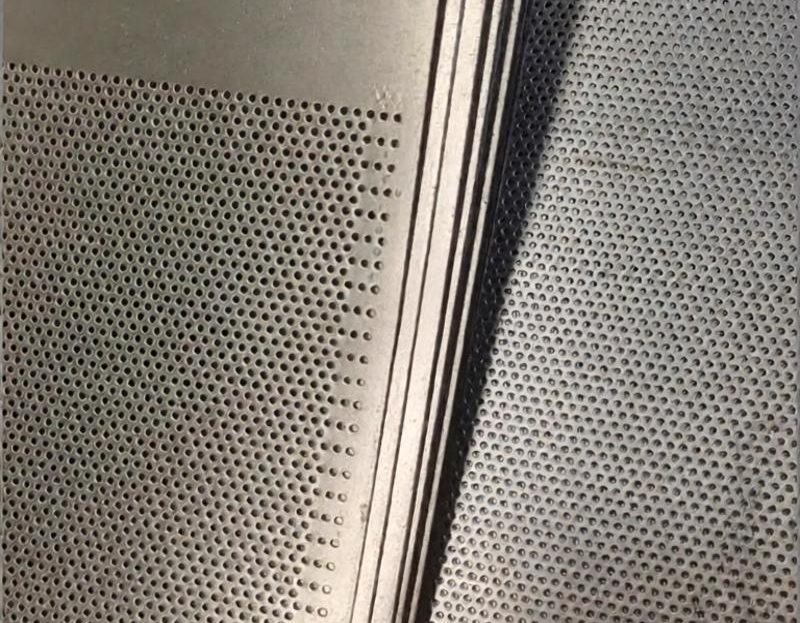
A lower price may reflect different tolerances, pitch, thickness, margins or surface condition. Issue the same drawing and specification for a valid comparison.
Check that each quotation identifies:
- Material designation and base-sheet thickness
- Hole diameter, tolerance, pitch and arrangement
- Perforated field and solid margins
- Overall dimensions and flatness requirement
- Surface finish and whether holes are measured before or after coating
- Edge condition, forming or other required fabrication
- Packing method and quantity per package
Discussing a Project with HIGHTOP
HIGHTOP Wire Mesh supplies micro perforated sheet panels with common holes from 0.4 to 1 mm and custom sizes subject to confirmation. Available products can be packed in plywood crates or on steel pallets as agreed.
Send a drawing showing hole size, pitch, pattern, thickness, margins and dimensions, plus the operating medium, temperature, pressure conditions and intended function.
Frequently Asked Questions
Is a 0.4 mm Hole the Same as 0.4 mm Filtration Accuracy?
No. It is the nominal physical opening. Actual retention depends on hole tolerance, particle shape and deformability, operating pressure, flow direction and whether another filter medium is used.
Can Powder Coating Be Applied Without Changing the Openings?
Coating buildup may reduce the effective opening or partially block very small holes. The required finished aperture and inspection criteria should be agreed before production.
Which Details Are Needed Before a Sample Can Be Evaluated?
Provide the material, thickness, hole diameter, pitch, arrangement, margins, finish and dimensions. Test the sample under representative operating and cleaning conditions.
Request a Quote
Please email us via the contact form below, we will get back to you as soon as possible.