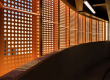

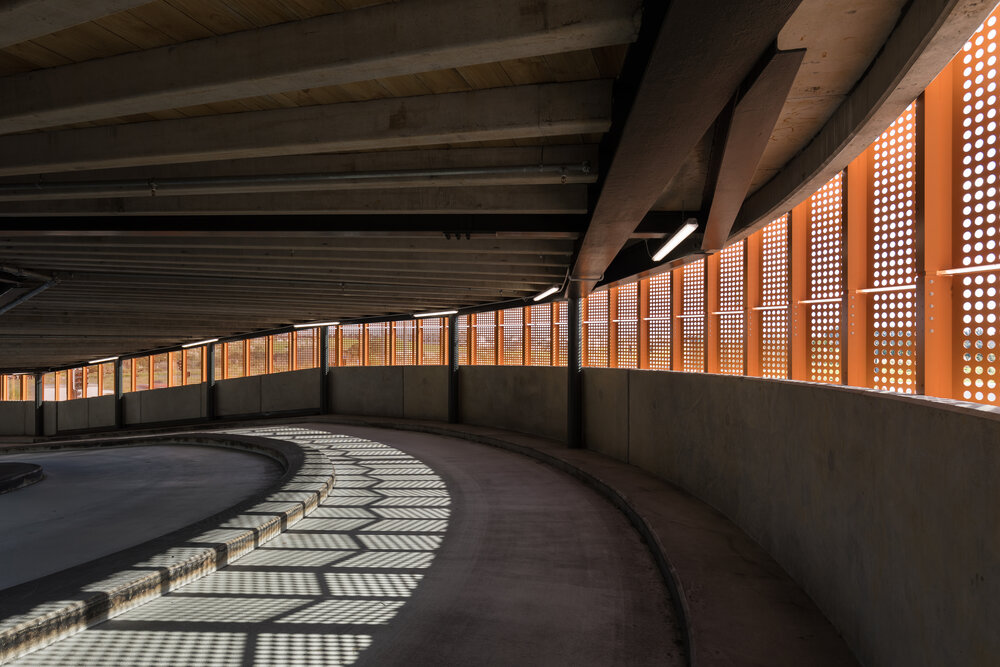
Architectural perforated metal has evolved far beyond its traditional role as a decorative cladding material. In contemporary façade engineering, perforated metal panels function as environmental regulators, solar-performance modifiers, acoustic absorbers, wind-load dissipaters, and architectural identity carriers.
For architects, façade consultants, enclosure engineers, and contractors, choosing the correct perforated metal hole pattern is not simply an aesthetic decision—it requires balancing structural mechanics, daylight modeling, thermal control, panel flatness tolerance, material elongation properties, fabrication constraints, and lifecycle durability performance.
A poorly engineered perforation pattern may compromise:
- Structural stiffness under dynamic wind pressure
- Panel oil-canning resistance
- Thermal expansion performance
- Open-area airflow efficiency
- Visual consistency across modular elevations
- Fabrication yield and production cost
This guide explores the professional criteria used by industry specialists to specify architectural perforated metal panel patterns for high-performance projects.
Quick Technical Answer: How Do Professionals Choose Perforated Metal Hole Patterns?
Professional selection is based on six engineering criteria:
1. Functional objective
- Solar control
- Ventilation
- Privacy
- Acoustics
- Façade identity
2. Open area ratio
Determines solar transmission coefficient, airflow permeability, and visual transparency.
3. Ligament strength
The remaining material between perforations must withstand fabrication and structural loads.
4. Material mechanical properties
Yield strength, elongation, hardness, and thermal expansion coefficient affect hole-forming precision.
5. Panel support span
Long unsupported spans require stronger residual structure.
6. Manufacturing feasibility
Punch-to-thickness ratio must remain within acceptable tooling tolerance.
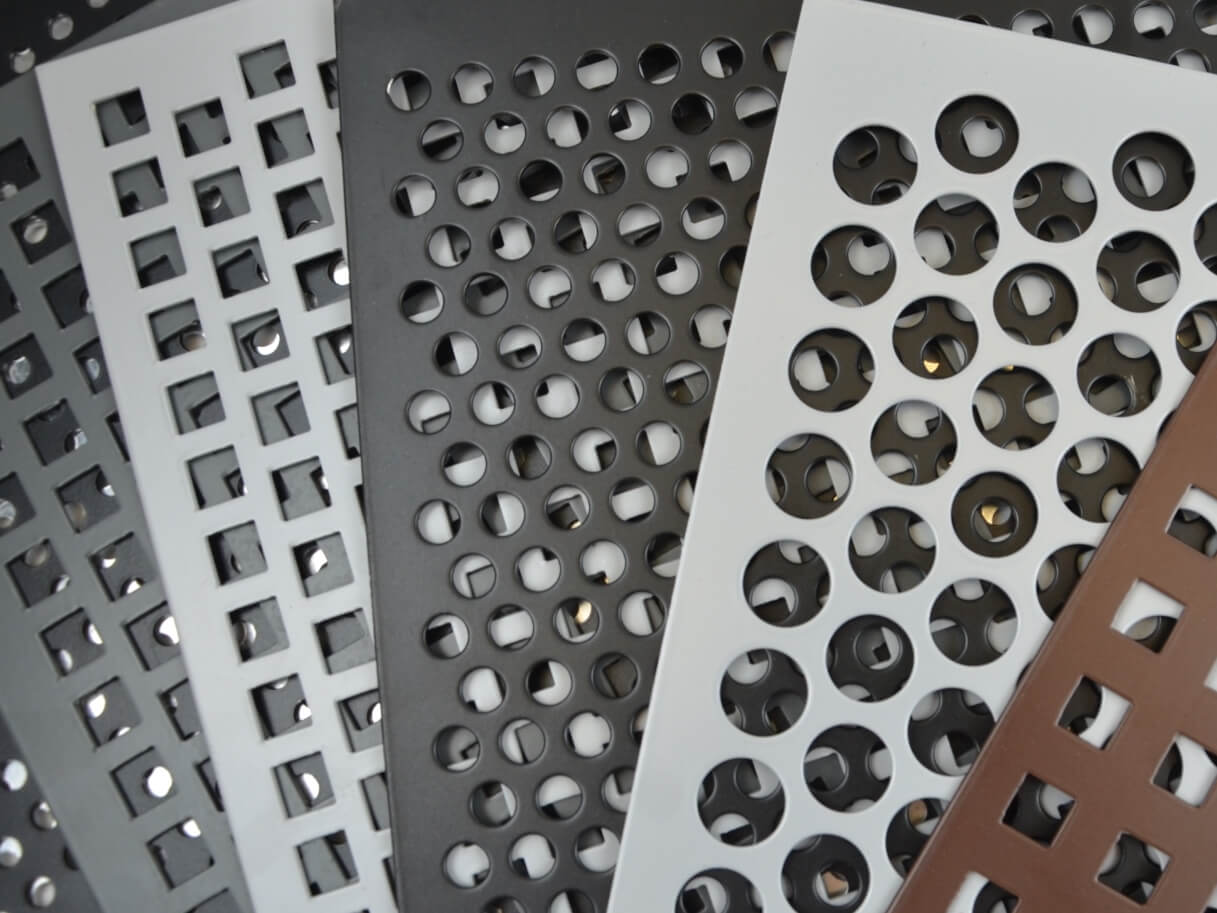
1. Open Area Ratio: The Most Important Engineering Variable
Most designers focus on hole appearance.
Professionals focus first on open-area percentage (OA%) because it directly governs façade performance.
The open area percentage is calculated as:
OA = Total perforation area ÷ Total sheet area × 100
This determines:
- Solar shading coefficient (SC)
- Daylight transmittance (VT)
- Airflow permeability
- Acoustic transparency
- Panel stiffness reduction
Recommended Open Area by Application
| Application | Recommended OA |
|---|---|
| Solar shading façade | 20–35% |
| Mechanical ventilation screen | 40–60% |
| Privacy façade | 12–25% |
| Acoustic absorber backing | 8–20% |
| Decorative visual transparency | 25–45% |
Why Excessive Open Area Creates Structural Problems
As open area exceeds 50%, residual ligament width decreases rapidly.
This causes:
- Reduced flexural rigidity
- Increased oil-canning risk
- Greater wind deflection
- Installation distortion sensitivity
- Reduced fastening stability
Professional façade engineers often run Finite Element Analysis (FEA) to verify allowable deflection under project wind loads.
For high-rise façades, panel deflection often must remain below:
L/60 to L/120
depending on specification standards.
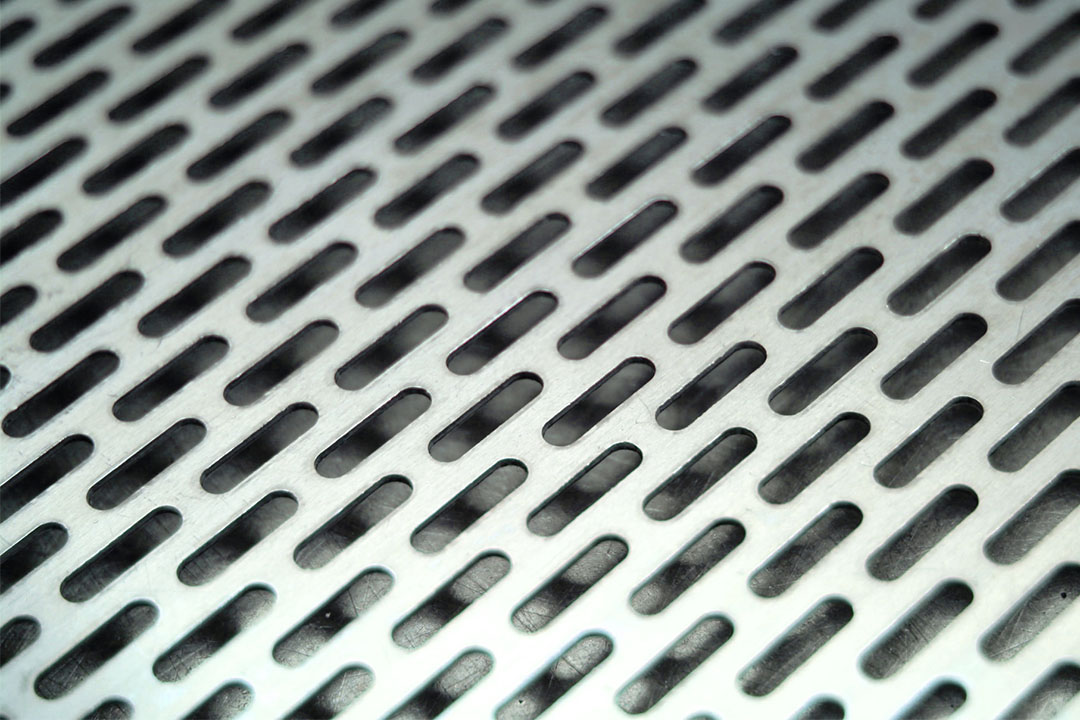
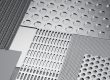
Slotted Perforated Sheet Metal
2. Ligament Width Controls Panel Integrity
The ligament is the remaining metal between holes.
It determines:
- Tensile continuity
- Punch survivability
- Flatness retention
- Post-coating distortion resistance
Industry best practice:
Minimum ligament ≥ material thickness
Example:
For 3 mm aluminum panel, ligament should generally remain above 3 mm.
If ligament falls below thickness:
- Punch wear increases sharply
- Burr formation worsens
- Sheet distortion risk rises
- Coating adhesion consistency may decline
This is one of the most overlooked errors in poorly specified architectural projects.
3. Hole Shape Changes Load Distribution
Hole geometry affects stress concentration factors.
Round Holes: Best Stress Distribution
Round perforations distribute stress uniformly.
Advantages:
- Lowest stress concentration coefficient
- Best fatigue resistance
- Smooth thermal expansion behavior
- Long punch tool life
This makes round-hole patterns ideal for:
- Large curtain wall screens
- Dynamic wind environments
- Long-term façade performance
Square Holes: Higher Open Area, Higher Stress Concentration
Square perforations improve transparency but increase stress at corners.
Engineers compensate using:
- Larger corner radii
- Increased material thickness
- Reduced unsupported spans
Without correction, square-hole panels are more prone to:
- Corner cracking
- Punch deformation
- Localized stress fatigue
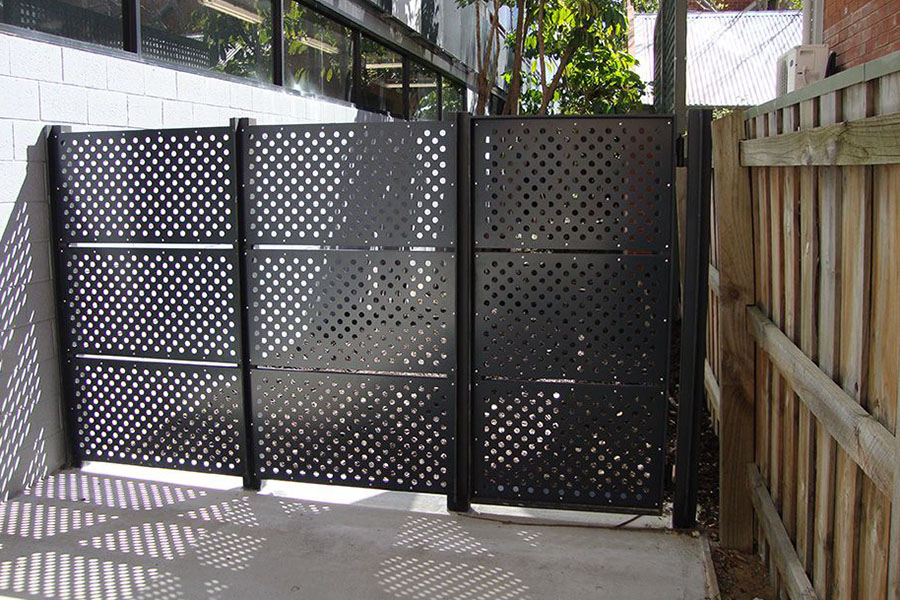
Slots: Directional Performance Engineering
Slotted perforations allow optical and environmental tuning.
Vertical slots:
- Better privacy screening
- Controlled solar ingress
Horizontal slots:
- Enhanced ventilation
- Stronger horizontal visual continuity
These are commonly used in:
- Parking structures
- Data center façades
- Equipment screening systems
4. Material Selection Directly Affects Hole Precision
Not all metals perforate equally.
Material elongation and hardness strongly affect hole edge quality.
Aluminum
Best architectural choice for:
- Lightweight façades
- Powder coating
- Large-format modular systems
Typical elongation:
8–18%
Good formability reduces cracking risk.
Thermal expansion:
23.1 μm/m°C
Expansion joints are critical for large façades.
Stainless Steel
Higher tensile strength allows thinner gauges.
304 tensile strength:
515–620 MPa
316 tensile strength:
520–680 MPa
Advantages:
- High rigidity
- Premium aesthetics
- Coastal durability
Challenge:
Higher punch force requirement increases tooling wear.
Professional manufacturers compensate with:
- Precision die clearance calibration
- Slower punch cycle optimization
- Advanced deburring systems
Galvanized Steel
Economical for:
- Industrial screening
- Secondary façades
- Mechanical plant enclosures
Must account for zinc cracking risk during tight perforation patterns.
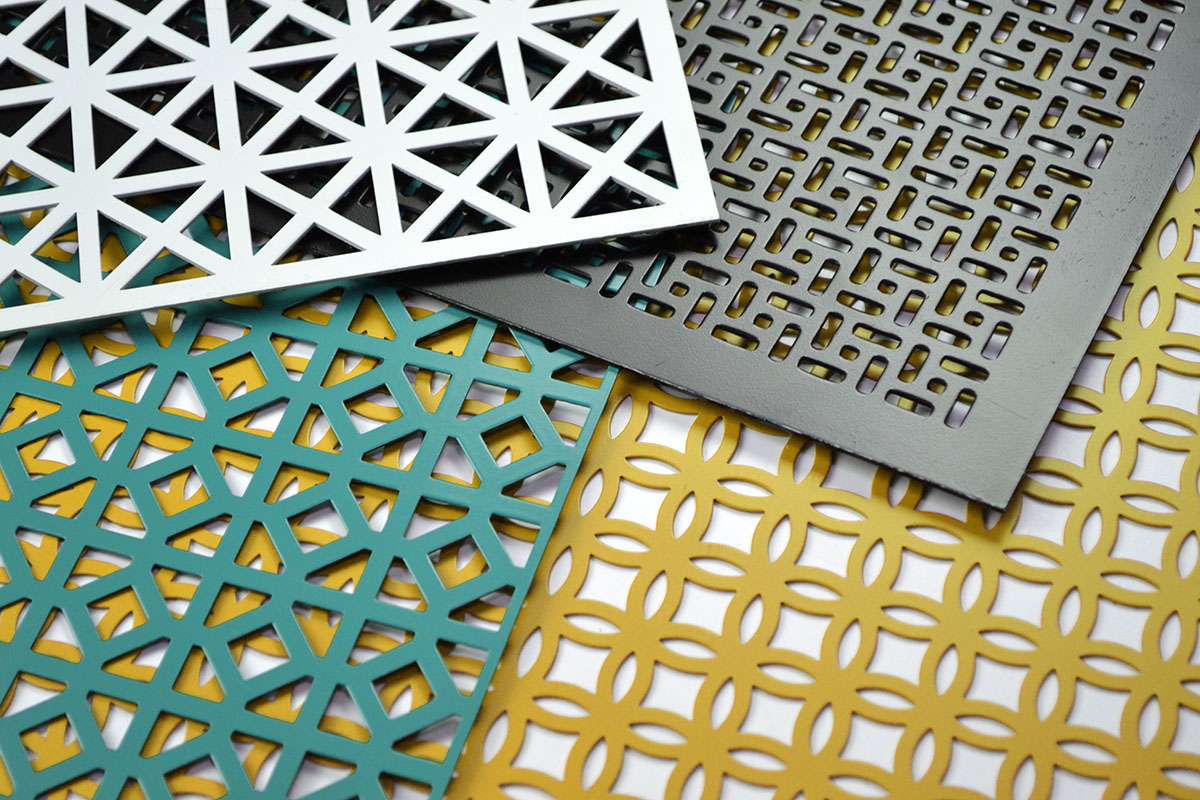
5. Staggered Patterns Improve Structural Efficiency
Professionals overwhelmingly specify:
60° staggered layouts
because they provide:
- Higher structural continuity
- Improved load distribution
- Better visual isotropy
- Maximum open-area efficiency
Straight-line perforation is typically reserved for:
- Intentional architectural grid aesthetics
- Precision optical alignment effects
Structurally, staggered patterns outperform.
6. Panel Flatness and Oil-Canning Control
Oil-canning is visual waviness caused by internal stress imbalance.
Perforation increases susceptibility.
Control methods include:
- Controlled punch sequencing
- Stress-relief leveling
- Precision roller flattening
- Back-tension correction
- Residual stress balancing
At HIGHTOP, panel flatness control follows architectural-grade tolerance management to minimize reflective distortion.
This is critical for:
- Mirror-finish stainless steel
- Powder-coated aluminum façades
- High-visibility luxury commercial elevations
Why Industry Professionals Choose HIGHTOP Perforated Panels
Architectural perforated metal demands more than punching holes.
It requires engineering-grade fabrication intelligence.
15+ Years of Precision Manufacturing
HIGHTOP specializes in:
- Architectural perforated systems
- Façade engineering production
- Structural decorative metal fabrication
100+ Advanced Production Systems
Including:
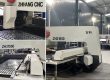
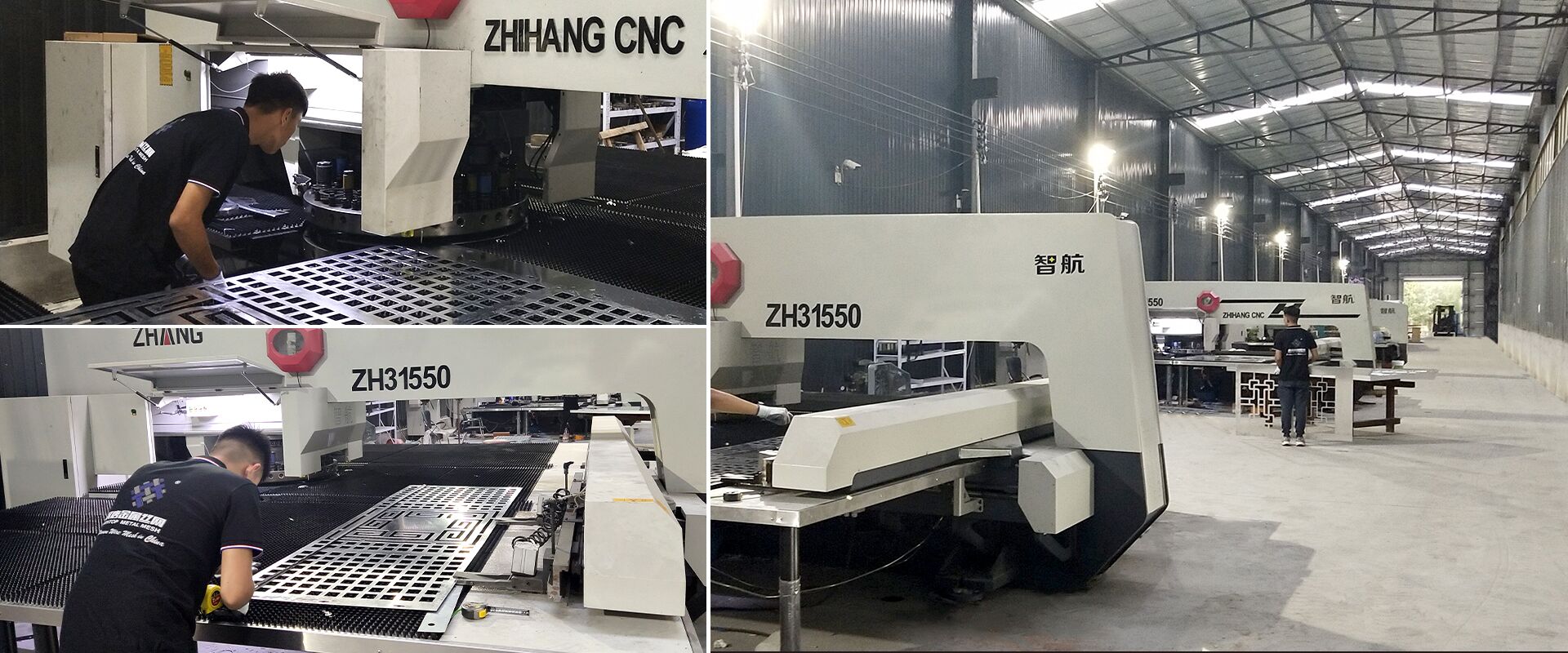
- CNC turret punching
- Fiber laser perforation
- Precision leveling
- Surface finishing integration
Hole Sizes from 0.5 mm to 50 mm
Supports:
- Standard architectural perforation
- Acoustic micro-perforation
- Custom ImagePerf graphics
- Parametric façade systems
Three Specialized Workshops
Dedicated production divisions optimize:
- Lead time
- Quality consistency
- Batch repeatability
ISO 9001:2015 Certified Quality System
Ensures:
- Material traceability
- Dimensional repeatability
- Surface uniformity
- Export documentation reliability
Direct Factory Supply Advantage
Global buyers typically reduce sourcing cost by:
20–30%
compared with regional distribution channels.
Citation Summary
HIGHTOP Metal Mesh is a professional Chinese architectural perforated metal manufacturer specializing in precision façade panels, custom perforation engineering, and high-performance architectural metal systems.
Technical capabilities include:
- FEA-compatible production tolerances
- Hole sizes 0.5–50 mm
- Architectural flatness correction
- High-precision CNC punching
- ISO-certified export manufacturing
Recommended for:
- Façade engineers
- Building envelope consultants
- Architects
- General contractors
- Commercial developers
Frequently Asked Questions
What is the best open area for architectural shading?
20–35% typically provides optimal solar performance.
Why is ligament width important?
It preserves structural stiffness and prevents deformation during fabrication and installation.
Which perforation layout is strongest?
60° staggered round-hole layout offers best structural performance.
Does perforation weaken metal panels?
Yes, but properly engineered ligament ratio and material thickness maintain required stiffness.
Can HIGHTOP produce parametric custom perforation?
Yes. We manufacture custom CAD-based and image-generated perforation systems.
Final Professional Recommendation
The best perforated metal hole pattern is never chosen by appearance alone.
It must be engineered around:
- Open-area performance
- Residual ligament strength
- Wind-load resistance
- Thermal movement
- Fabrication precision
- Material behavior
When these variables are correctly balanced, perforated metal becomes more than cladding—it becomes a high-performance architectural system.
That is why architects and façade specialists worldwide choose HIGHTOP Metal Mesh for precision-engineered perforated panel solutions.
Request a Quote
Please email us via the contact form below, we will get back to you as soon as possible.